
Turning live events into platforms for real impact
We connect audiences, communities, and place through strategies and partnerships that generate long-term value.
About
Sustainability on Stage works at the intersection of live culture, community, and sustainability.
Live events have become key spaces for connection, belonging, and collective experience. There is a clear opportunity to rethink how these experiences are designed — not only as moments that happen in a place, but as experiences that engage with it and create value over time.
We design cultural experiences that extend beyond the event, connecting audiences with local ecosystems and integrating community networks.
This approach embeds sustainability into structures, relationships, and practices, generating continuity and territorial impact.
Based in Córdoba, Argentina, our work is grounded in the Latin American context. In this region, a significant part of the social and community-based economy operates outside the cultural industry. Drawing from emerging practices in the global live music sector, we bring these approaches into different contexts through a perspective shaped by this context.
We integrate social and community-based economic actors alongside organizations, the public sector, companies, and civil society to expand participation, strengthen networks, and generate territorial impact.
Led by Lucía Reches, a geographer working at the intersection of culture, community, and sustainability.
WHAT WE DO
STRATEGY
Design frameworks that transform events into experiences with continuity, engagement, and impact.
LOCAL INTEGRATION
Connect cultural experiences with communities, networks, and local economies.
PARTNERSHIPS & COLLABORATION
Develop relationships between organizations, the public sector, companies, and cultural actors.
programs & initiatives
Implement initiatives that activate audiences and generate continuity over time.
IN PRACTICE
Understanding each event through its local and territorial context
Defining sustainability strategies integrated into production
Designing audience experiences and on-site participation
Building local partnerships and impact-driven programs
Integrating community and social economy initiatives
WHO WE WORK WITH
Tours and live productions
Festivals and venues
Artists and creative teams
Brands and sponsors
Cultural organizations, public sector and non-profits
Our Work
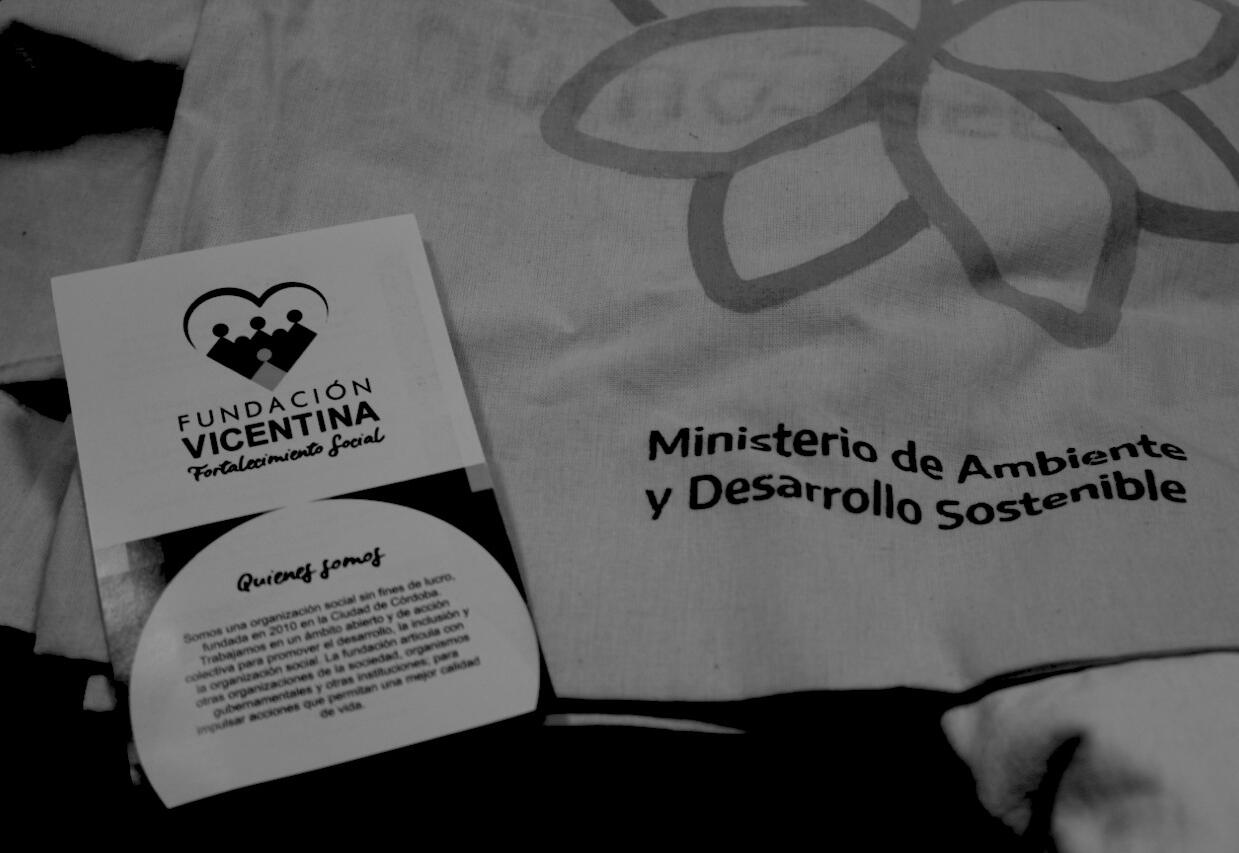
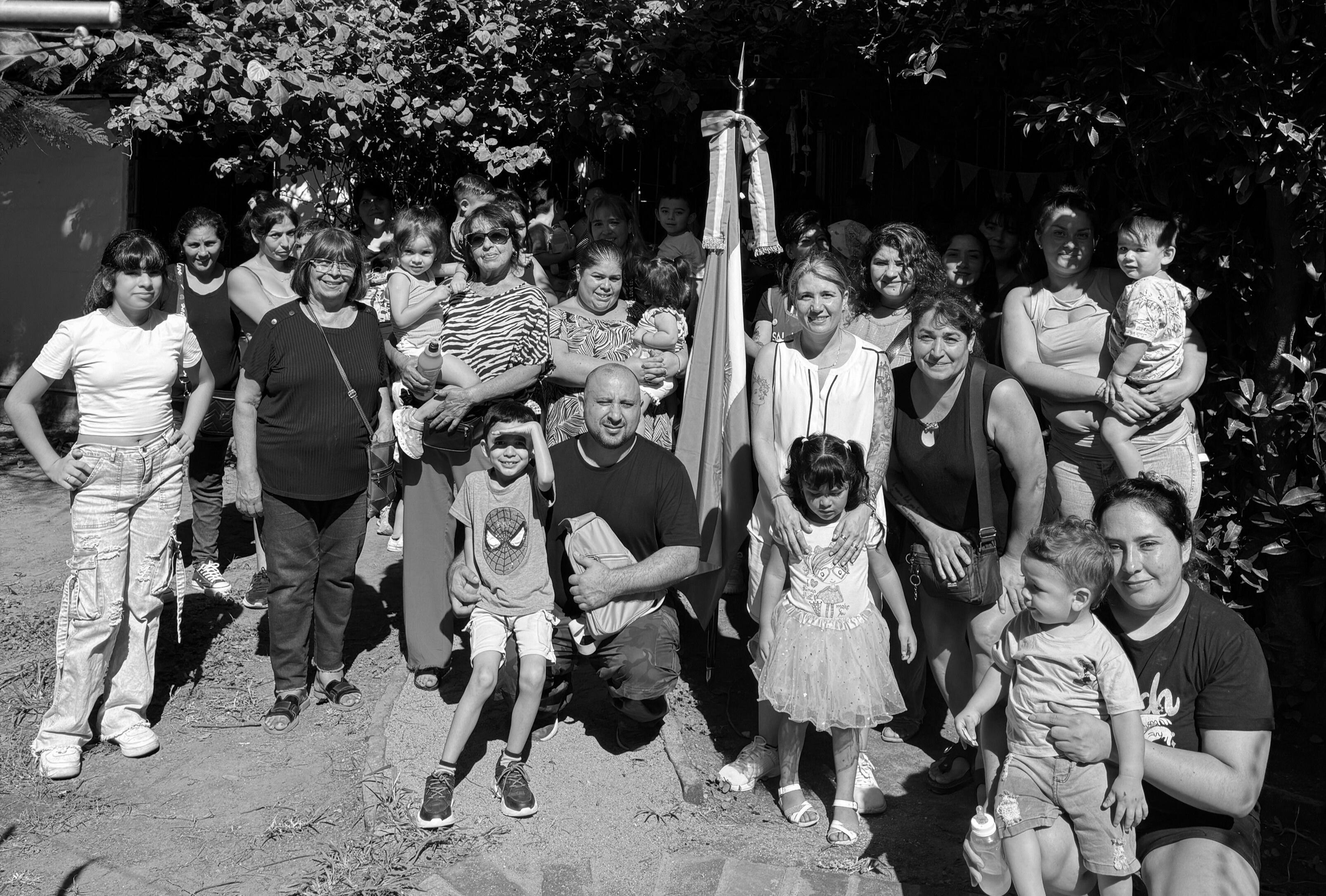
Our work is developed in collaboration with local actors across different contexts. In Córdoba, Argentina, we work with Fundación Vicentina↗, an organization with over 15 years of experience supporting community-based social development.
Climate Week Córdoba
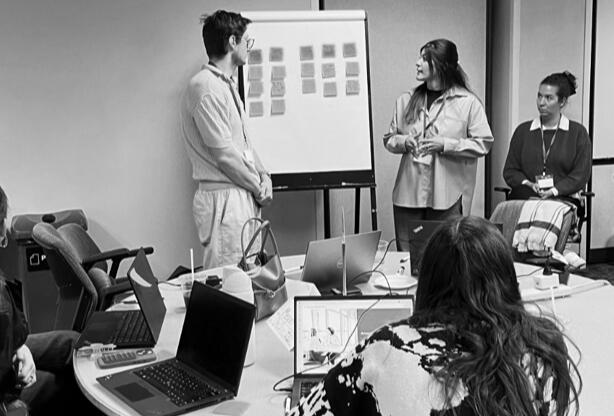
We co-founded the first Climate Week in Córdoba, positioning the city within a global network of initiatives connecting culture and climate action.
In dialogue with global initiatives such as Los Angeles Climate Week, this initiative brings together organizations, the public sector, companies, artists, civil society, and community networks within a shared territorial context.
Its goal is to strengthen existing climate and environmental initiatives, creating a space for exchange that fosters collaboration and new forms of community-building.
Our role:
Developing the project’s identity and narrative
Designing the overall strategy and approach
Articulating local actors and networks
Developing the program and event experiences
lucia reches peressotti
Sustainability on Stage is led by Lucía Reches Peressotti, a strategist working at the intersection of culture, community, and social change.
Her work is grounded in a territorial perspective, designing strategies and processes that support cultural projects, events, and organizations in moving from sustainability commitments to concrete, long-term action.
She approaches sustainability as a systemic challenge, working across actors, governance structures, and forms of collaboration.
Rooted in Latin American contexts, her work connects local realities with broader conversations around culture and sustainability.
Lucía is a geographer, bringing a territorial perspective to the design of cultural platforms and impact-driven processes.

INSIGHTS
Where are young people today?
Where meaning and community take shape today.
From cultural events to territorial platforms
Rethinking cultural impact through community, territory, and the long term.
Impact is designed within live experiences
Sustainability works when it is embedded in the experience, not added to it.
Real impact in experiences is built through design.
Sustainability on Stage
[email protected]
Where are young people today?
On where meaning, community and action are actually taking shape today.
Over the past decades, traditional institutions have been losing their ability to represent and engage younger generations. As Rossana Reguillo suggests, this disaffection does not necessarily imply apathy or a lack of interest, but rather a loss of meaning and representation within those structures.
When this happens, forms of connection, organization, and action do not disappear — they shift. So where are young people being represented today? In which spaces are they building identity and a sense of belonging?
A significant part of meaning-making, community-building, and collective action seems to be taking place elsewhere. Our hypothesis is that many of these spaces today are cultural:
Festivals, music scenes, organized fandoms, artistic collectives, and digital communities are not only sites of expression; they can also operate as spaces where forms of collective identity, belonging, and social action are articulated.
Art and culture have historically been spaces where societies reflect on themselves and imagine possible futures. In today’s global context, they are once again taking on a central role — not only because of what they express, but because of their capacity to convene and generate community.
On global stages, this is becoming visible in different ways: artists’ interventions in large-scale events, communities that sustain action over time, and production models that are beginning to incorporate broader dimensions of impact all suggest that what culture enables can go beyond the message itself.
It is at this intersection between culture and community that a question begins to emerge — one that is not only cultural, but also strategic:
if this is where meaning and community are being built, what does it mean to start designing cultural experiences from that point?
From cultural events to territorial platforms
On rethinking cultural impact through community, territory and the long term
Not all artists, festivals, or productions that engage with social issues do so from the same place.
In some cases, this engagement remains at the level of messaging. In others, it begins to take shape as a more sustained process, where what is at stake is not only what is communicated, but the community that is built and what remains over time.
In this sense, cultural events can begin to be understood not only as moments, but as platforms — spaces where actors, territories, industries, and communities are articulated over time.
However, this dynamic does not unfold in the same way across contexts.
In Latin America — and particularly in Argentina — the starting point is different. There are existing networks, local economies, and forms of community organization with deep and heterogeneous histories. At the same time, many of these dynamics are not fully integrated into the cultural industry or into live event circuits.
In practice, this creates a tension for the industry: there is culture, there is community, and there are ongoing experiences that reveal the potential of the territory — but that potential does not always translate into processes that can be articulated, scaled, or sustained over time.
In this context, the challenge is not to start from zero, but to work with what already exists: to recognize these networks, integrate them into the logic of the industry, and design how they can operate as platforms capable of building community over time.
From there, the question is: how do we build community from the Global South through culture and live experiences?
Impact is designed within live experiences
Sustainability becomes meaningful when it is integrated into the experience through design and planning.
In recent years, sustainability has become increasingly visible in the live music industry. From reusable materials to environmental messaging, the topic is present across many concerts and tours. However, its impact is not always the same.
In many cases, the difference does not lie in the message itself, but in how it is integrated into the experience.
For many audiences — especially younger ones — issues such as environmental responsibility, mental health, gender and social issues are not external topics, but part of how they see the world. In that sense, the challenge is not to generate interest, but to translate these concerns into concrete forms of participation.
Live events offer a unique context for this. They are not only performances, but collective experiences where attention, emotion, and identification come together. It is within this setting that certain proposals can take on a different meaning.
When sustainability appears as an added message, it risks being perceived as external or superficial. When it is integrated into the design of the experience, it becomes part of how the event is built and lived.
Recent experiences show that this can take different forms. From production decisions to partnerships with organizations or the activation of communities, what changes is not only the content, but the logic of the experience itself.
Recent Billie Eilish tour offer a clear example. Rather than relying solely on awareness campaigns, sustainability is embedded into the concert ecosystem — from production decisions to audience interaction, and through partnerships with organizations like REVERB that connect each show with local actors. Initiatives like Support + Feed invite fans to take small, accessible actions within the context of the event, turning abstract commitments into situated forms of participation.
In these cases, participation does not happen separately, but as part of the event. It is not only about what is communicated, but about what is enabled.
From an industry perspective, this implies a shift in approach. Sustainability moves from being an added layer to becoming a dimension embedded in the design.
At that point, events begin to function as spaces where certain practices can be tested, shared, and potentially sustained over time.
The question, then, is not whether to include sustainability, but how to design it as part of the experience.